
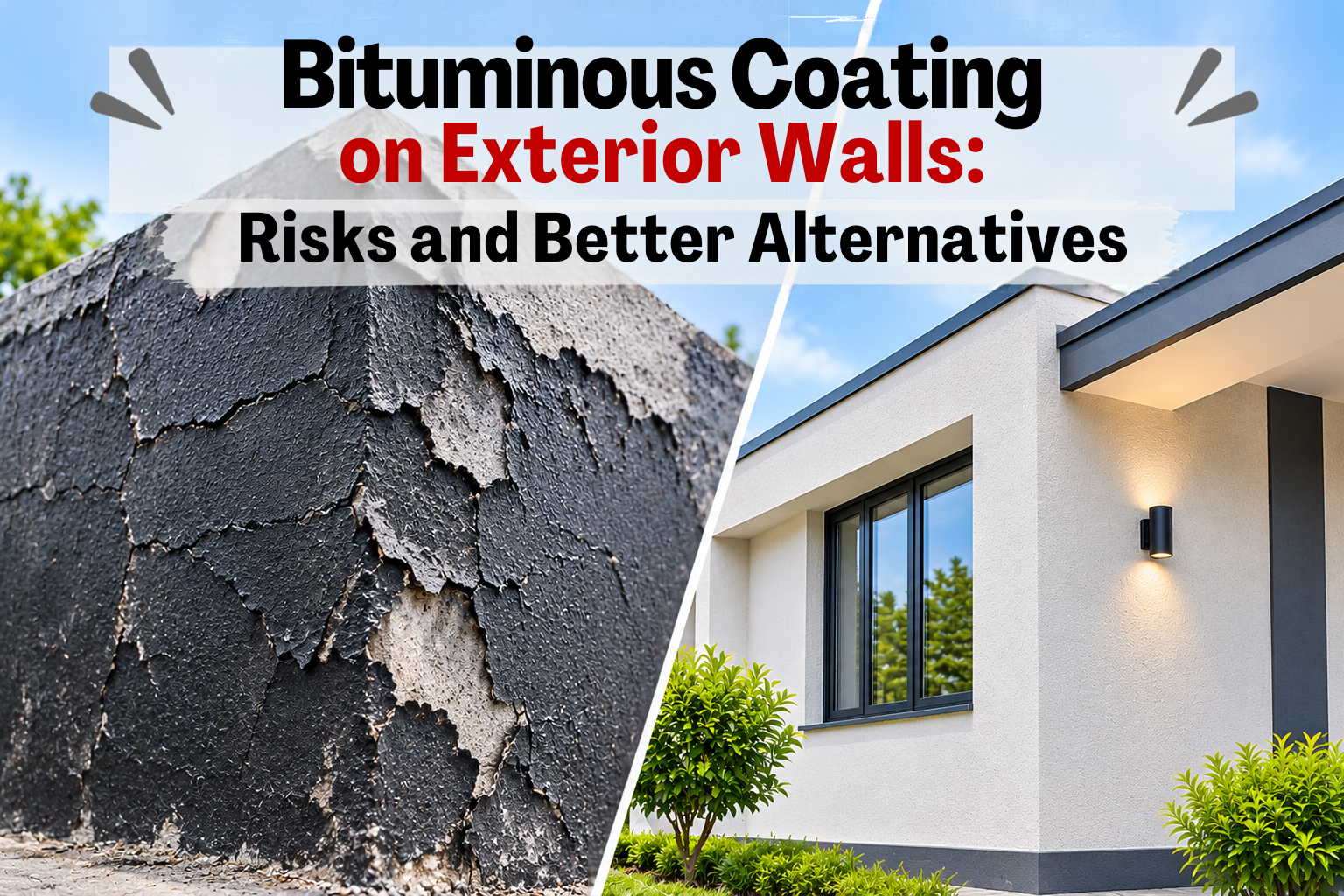
Building a house is one of the biggest investments in a person’s life. From selecting construction materials to choosing the right exterior finishes, every decision plays an important role in the durability, appearance, and maintenance of the property.
However, some construction decisions can lead to expensive problems when the materials are not suitable for their intended application. One such issue is the use of bituminous coatings on exterior walls without considering their compatibility with cement plaster, paint, and the surrounding environment.
For homeowners in Pakistan, understanding the potential risks of bituminous coating on exterior wall and choosing appropriate alternatives can help prevent unnecessary repair costs and protect the long-term value of a property.
In this guide, we will discuss the potential problems associated with unsuitable bituminous coatings, suitable alternatives, and practical tips for maintaining exterior walls.
What Is a Bituminous Coating?
A bituminous coating is a protective material made primarily from bitumen, a petroleum-based substance commonly used in certain waterproofing and protective applications.
Depending on the product formulation, bituminous coatings may be used on foundations, selected concrete surfaces, and other areas where protection against moisture is required.
However, not every bituminous product is designed for exposed exterior walls. Before applying any coating over cement plaster, it is important to confirm that the product is suitable for the substrate, environmental conditions, and intended finish.
Choosing the wrong material or applying it incorrectly can create problems with adhesion, moisture management, and subsequent finishing work.
Potential Risks of Applying Bituminous Coating on Exterior Walls
1. Poor Adhesion Between Coating and Cement Plaster
Exterior wall plaster provides the foundation for the final finishing layer. If a coating is incompatible with the plaster or applied over a dusty, weak, or damp surface, it may fail to adhere properly.
This can result in peeling, blistering, or separation between the coating and the underlying surface.
When deterioration occurs, damaged sections may require the removal of loose material, surface preparation, and the application of a suitable replacement system.
2. Moisture Trapped Behind the Coating
Exterior walls are regularly exposed to rainfall, humidity, and changing temperatures. If moisture enters the wall through cracks, joints, or other defects, an unsuitable coating system may restrict its ability to dry.
Depending on the wall assembly and product used, this can contribute to damp patches, blistering paint, salt deposits, or deterioration of the plaster.
The correct solution is to identify the source of moisture and select a compatible protective system rather than simply covering the affected area.
3. Deterioration of Exterior Paint and Finishes
A damaged coating or moisture-affected plaster can compromise the appearance and performance of exterior paint.
Common warning signs include:
- Peeling or blistering paint.
- Cracks in the exterior finish.
- Flaking or loose plaster.
- Damp patches on internal or external walls.
- White, powdery deposits caused by salts.
These symptoms may have different causes, so the wall should be inspected before repair work begins.
4. Higher Construction and Maintenance Costs
Using an unsuitable coating can turn a relatively simple finishing job into a more expensive repair project.
Depending on the extent of the damage, repairs may involve removing defective coatings, repairing plaster, addressing moisture penetration, preparing the surface, and repainting the affected areas.
Selecting the right materials and application method from the beginning can help reduce the risk of avoidable maintenance expenses.
Bituminous Coating on Exterior Walls Is A Good option?
No. The suitability of a bituminous coating on exterior walls depends on the manufacturer’s specifications, the wall material, the surface condition, and the intended application.
Bituminous products can be effective in appropriate waterproofing applications, but they should not automatically be treated as general-purpose exterior wall finishes.
Better Alternatives to Bituminous Coatings for Exterior Walls
If your goal is to protect exterior walls against rain, weather exposure, and premature paint deterioration, several alternatives may be worth considering.
- Check compatibility with cement plaster and any subsequent finishing materials. You only need to get your external walls painted or tiled whatever is suitable aesthetically or as per your budget.
Professional Construction and Renovation Services in Islamabad
Choosing the right exterior wall finish is an important part of maintaining a property’s appearance, durability, and long-term value. Whether you are constructing a new house or upgrading an existing property, professional guidance can help you make informed decisions about materials and workmanship.
Hassan & Hussain Enterprises provides construction, renovation, and building maintenance services for residential and commercial properties.
If you are planning to construct or improve your home, repair damaged finishes, or undertake a renovation project, explore our waterproofing & seepage control, home and building maintenance, construction and renovation services in Islamabad.
From planning and finishing to renovation and property maintenance, selecting suitable materials and using the right techniques can help you avoid unnecessary expenses and achieve better results.
Contact Hassan & Hussain Enterprises to discuss your construction or renovation requirements.
Frequently Asked Questions
What is the best alternative to bituminous coating on exterior walls?
Exterior-grade masonry paint, breathable weather-resistant coatings, and purpose-designed waterproofing systems may be suitable alternatives. The right option depends on the wall’s condition and the protection required.
Can bituminous coating damage cement plaster?
An incompatible or incorrectly applied coating can contribute to adhesion failure, blistering, or deterioration of the finishing system. The outcome depends on the product, surface preparation, and moisture conditions.
Is bituminous coating suitable for waterproofing?
Certain bituminous products are designed for waterproofing applications. However, their suitability depends on the substrate, exposure conditions, and manufacturer’s instructions. Not every bituminous product is appropriate for exposed exterior walls.
How can I prevent exterior wall paint from peeling?
Use compatible exterior paint, prepare the surface properly, repair cracks, and address any moisture problems before painting. Persistent peeling should be investigated to identify its underlying cause.
What causes damp patches on interior walls?
Damp patches can result from rainwater penetration, plumbing leaks, rising damp, condensation, or other moisture-related problems. Identifying the source is essential before choosing a repair solution.
When should exterior wall plaster be repaired?
Plaster should be inspected when it becomes loose, cracks significantly, flakes, blisters, or shows signs of persistent moisture damage. The underlying cause should be addressed before applying a new finish.
Conclusion
The conclusion is that bituminous coating on exterior walls is only suitable for concealed surfaces and is used as primer before basement and rooftop waterproofing using membrane sheets hence never suitable externally.

